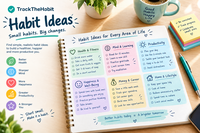
A habit tracker can be simple, colorful, practical, or completely customized to match a daily routine. The goal is to create a system that makes regular activities easy to record while helping you notice patterns over time.
Try a Monthly Habit Grid
Create a page with habits listed vertically and the days of the month across the top. Each time an activity is completed, add a checkmark or small symbol.
This layout gives you a quick visual overview of your month without requiring lengthy notes.
A weekly tracker can be easier for beginners. Divide a page into seven days and choose a few routines to monitor throughout the week.
You could include reading, studying, organizing your workspace, practicing a hobby, or preparing for the following day.
Different colors can represent different categories. For example, one color could represent learning activities, another organization, and another personal interests.
The system does not need to be complicated. A small legend at the top of the page can explain what each color means.
Instead of tracking numerous activities, dedicate a page to one particular goal. This might involve reading regularly, practicing a skill, completing creative projects, or maintaining an organized study routine.
A focused tracker can make progress easier to understand because every entry relates to the same objective.
Leave some space beneath the tracker for short weekly notes. You could record which routines felt easy, which were difficult, and what you would like to change the following week.
This turns the tracker into a planning tool rather than simply a collection of checkmarks.
For people who enjoy journaling, there are many ways to make a tracker visually interesting. You can use circles, boxes, simple drawings, stars, shapes, or themed monthly designs.
When looking for ideas for habit tracker layouts, remember that decoration is optional. A basic grid can work just as well if it is easy to use.
The most effective tracker is one you will actually want to return to. Start with a few meaningful routines, keep the layout convenient, and adjust it whenever your schedule changes. A flexible system can make everyday planning feel much more manageable.